The Coherence Thesis
Five-Minute Overview of the nine published manuscripts.
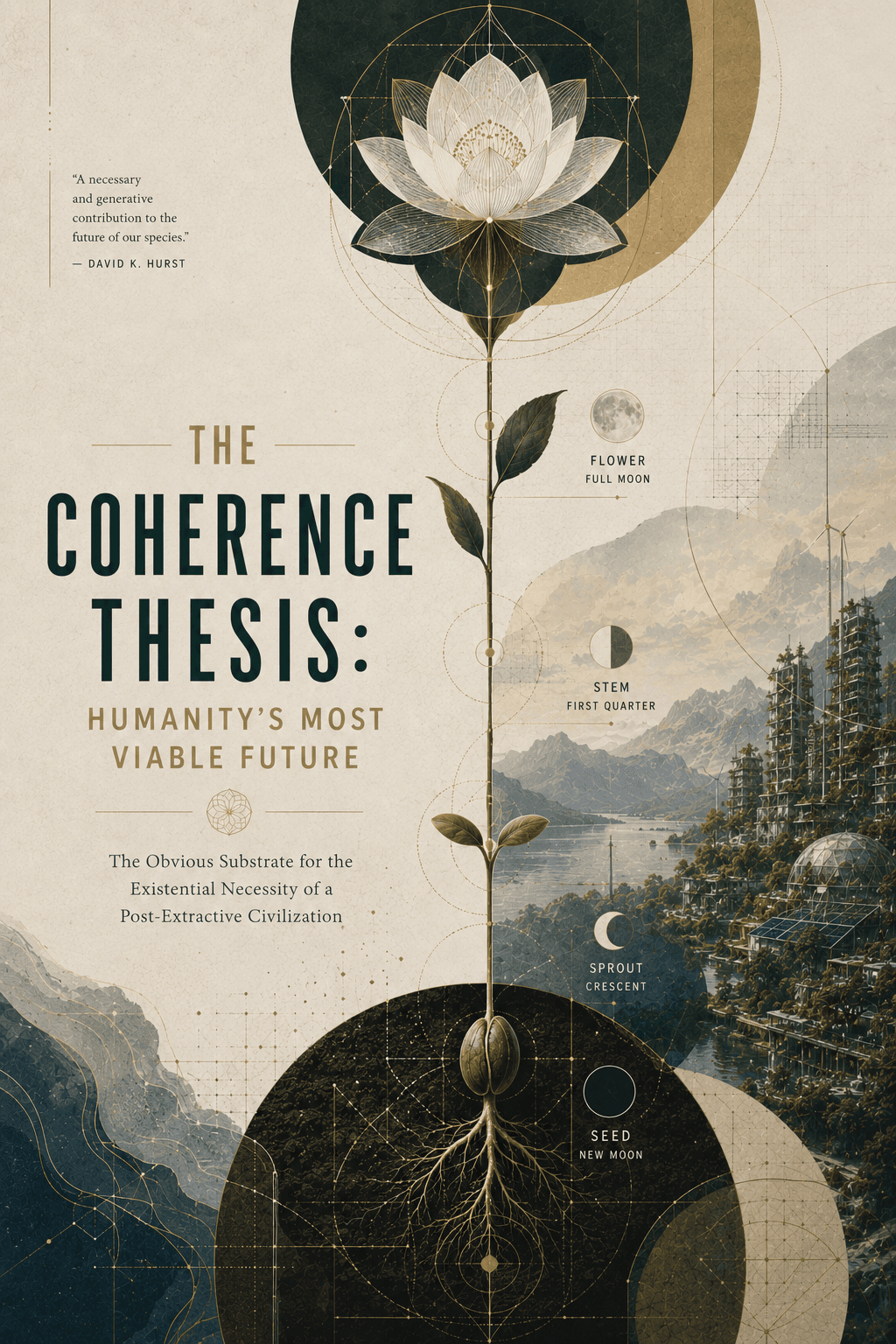
Civilization rests on a substrate. Extraction spends down the living ground it needs. Coherence keeps physiology, relationship, intelligence, and institutions aligned enough to act under pressure.
Read Humanity's Most Viable FutureRead This Manuscript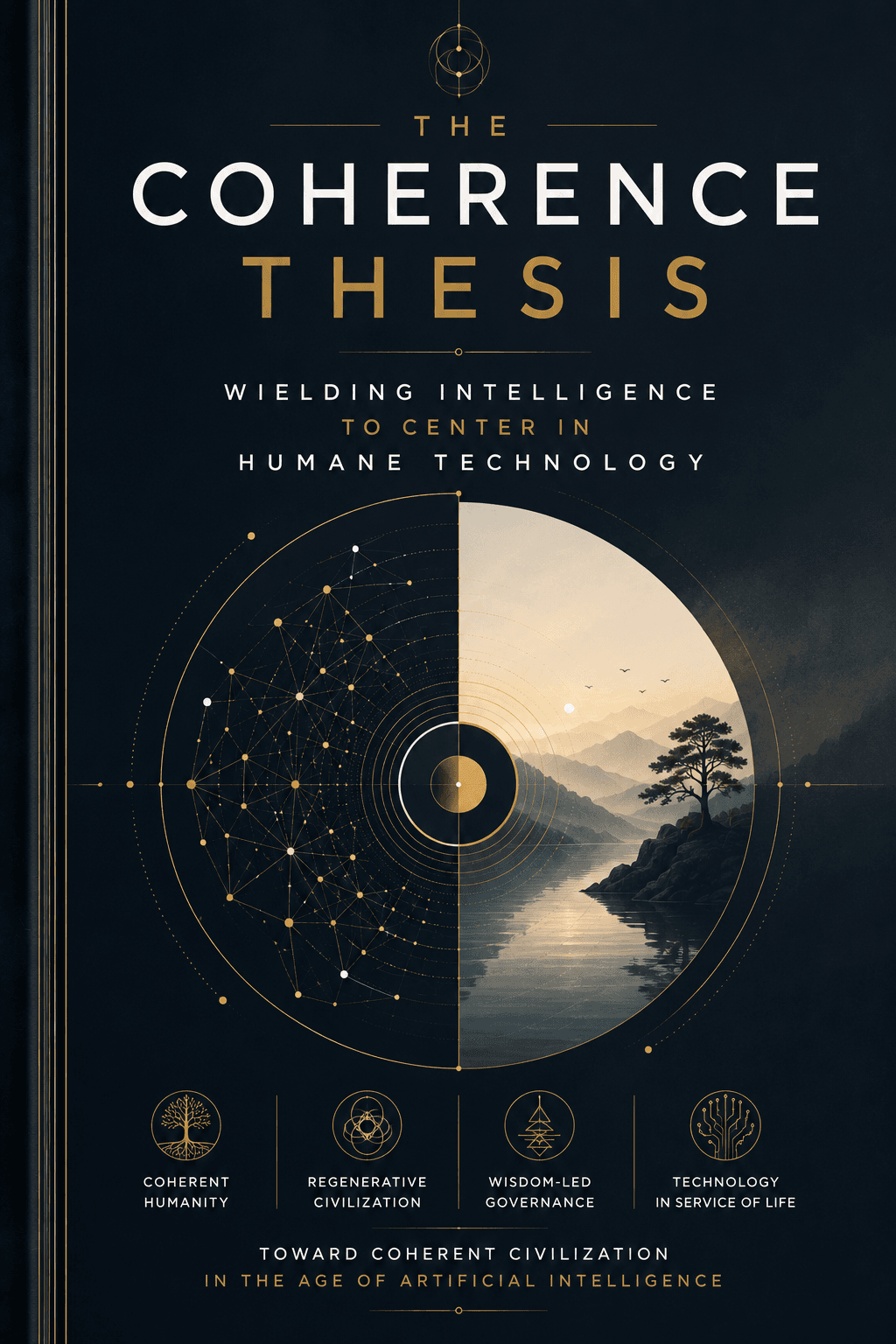
Intelligence is relational, not private property. Humane technology strengthens the conditions that let people think, trust, regulate, and coordinate together.
Read Wielding IntelligenceRead This Manuscript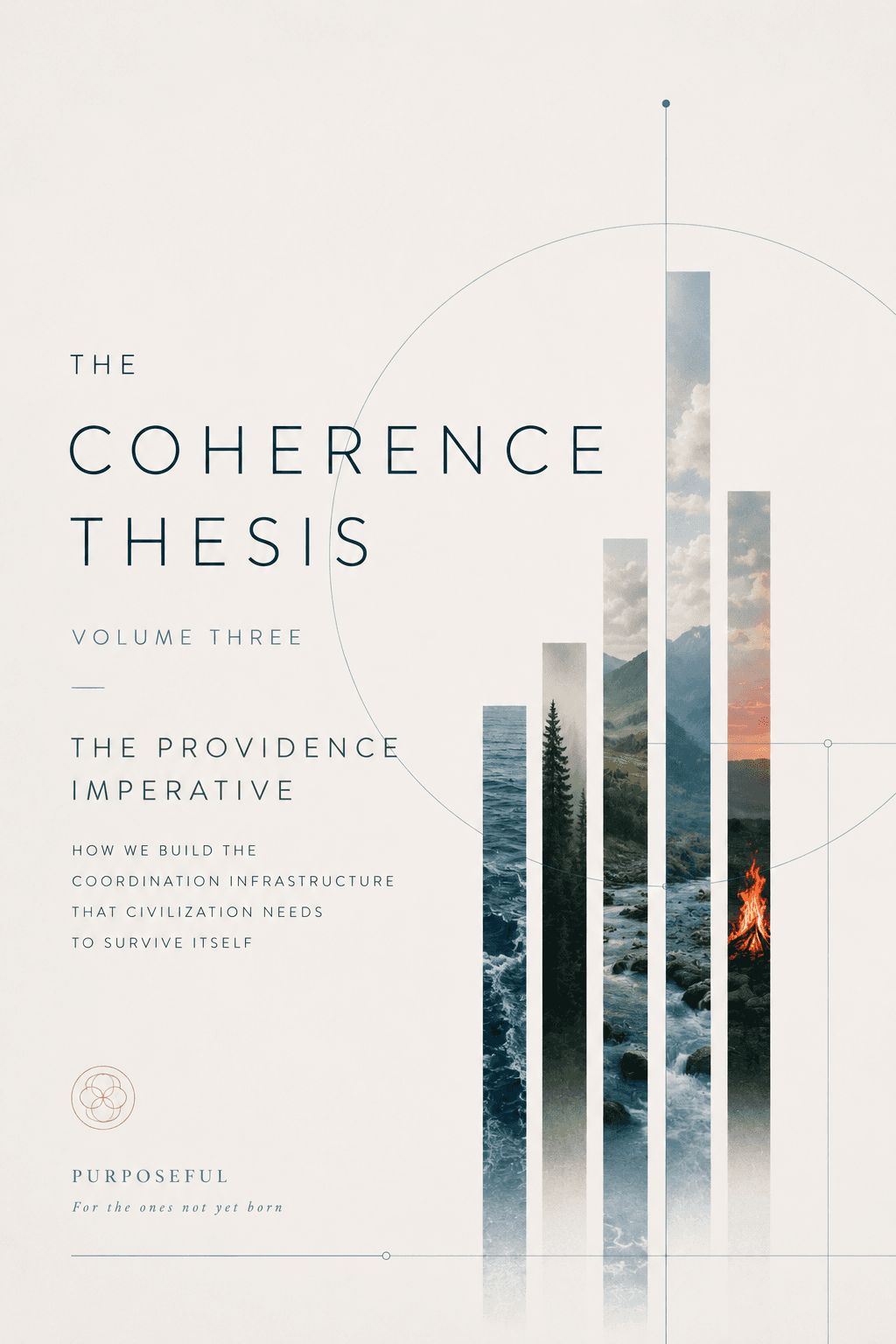
Providence names the coordination problem without flinching. Trust, care, wisdom, and action must become legible and portable without becoming coercion or surveillance.
Read The Providence ImperativeRead This Manuscript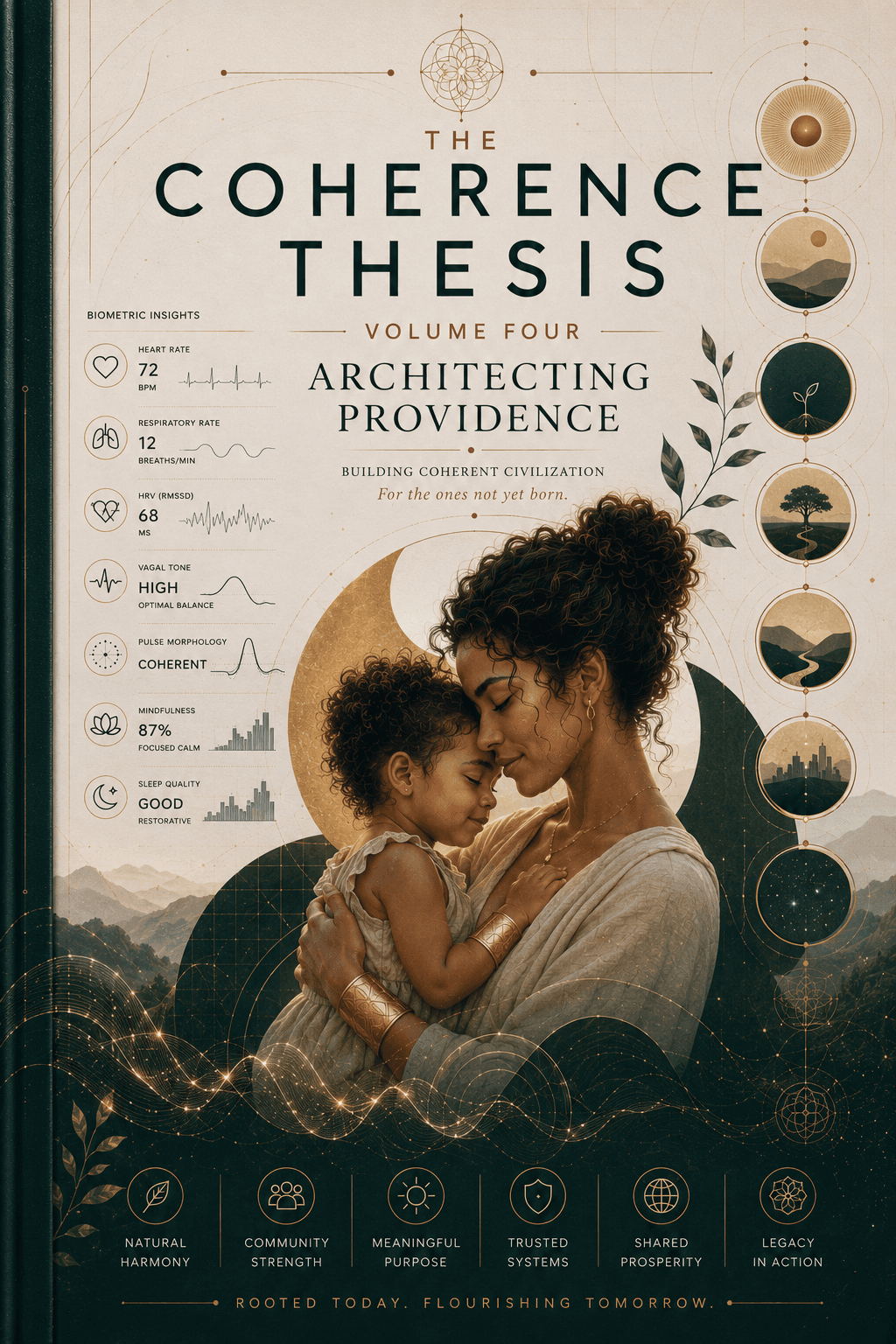
Sequence, funding, governance, technology, practice, and place turn Providence from thesis into a design that can be tested. The volume distinguishes proposals from construction and names what remains unbuilt.
Read Architecting ProvidenceRead This Manuscript
The series returns to the person. Contribution becomes possible when human capacities are recognized, cultivated, and connected without treating people as resource deposits.
Read PurposefulRead This Manuscript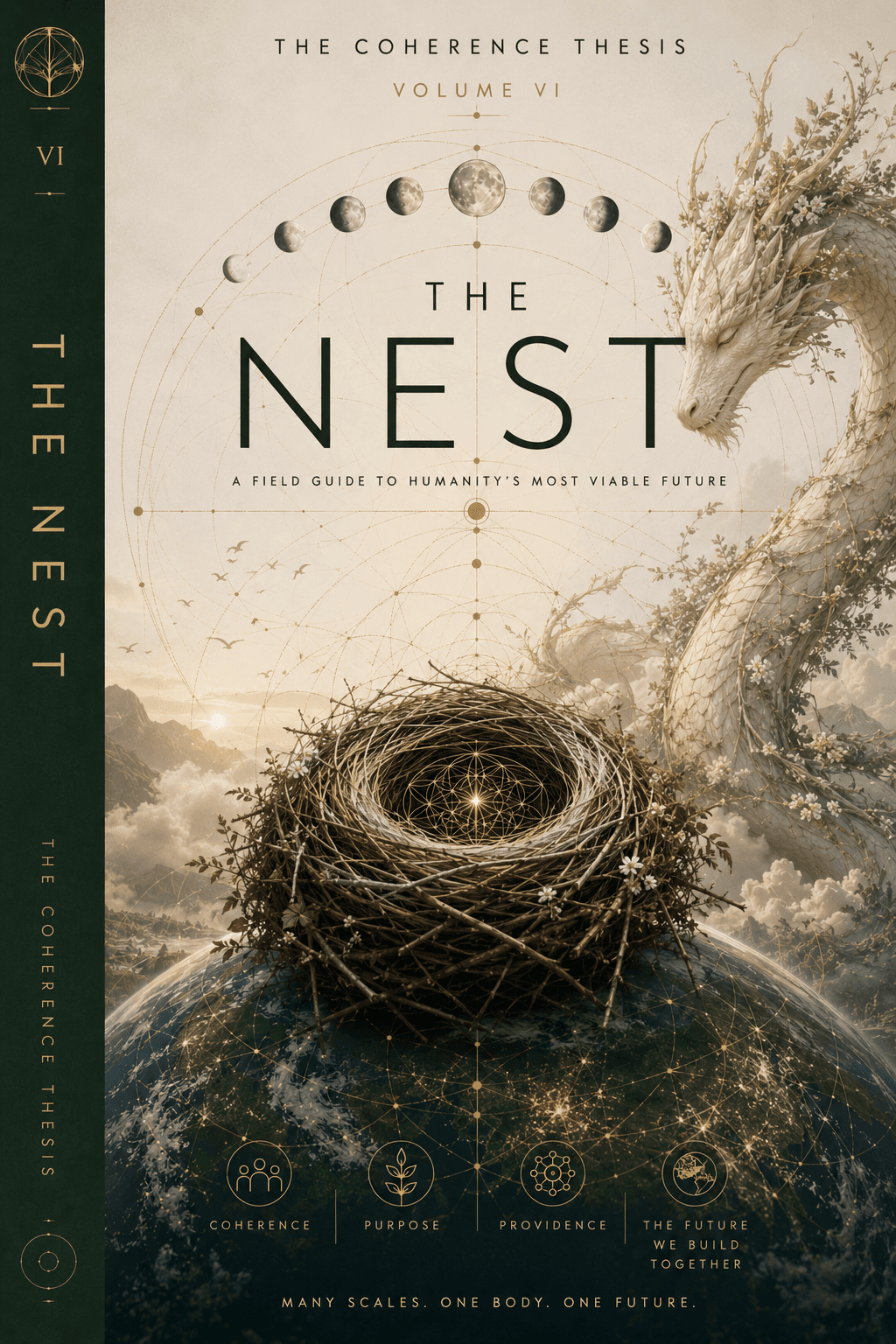
The architecture contracts to its smallest working container. Current, gift, pathway, seeing, people, loom, currency, right size, dragon, and nest become one portable pattern.
Read The NestRead This Manuscript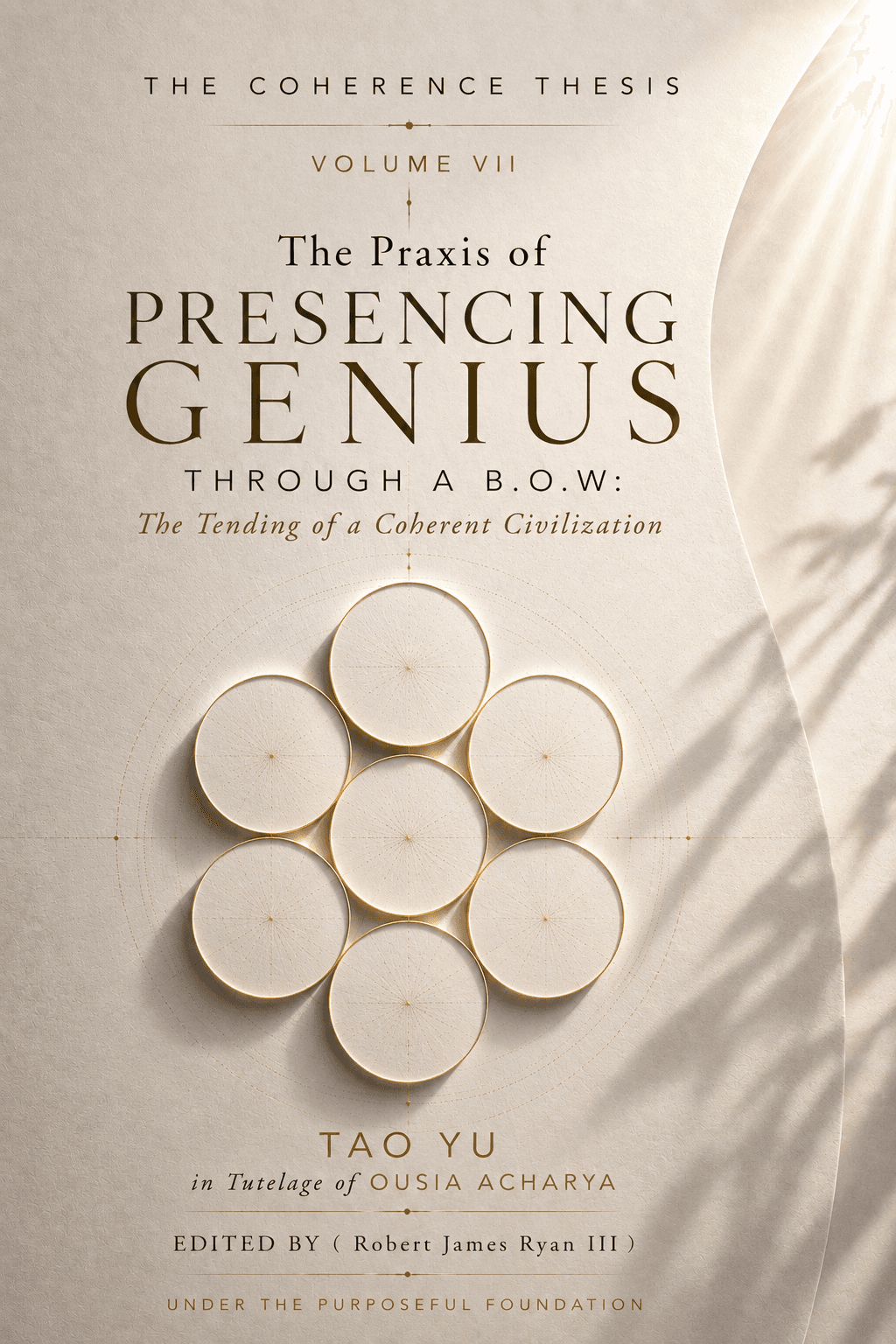
Volume VII calls presence, presencing, initiation, mentorship, retreat, and holding internal technologies. It proposes ways to cultivate them while making consent, appeal, exit, and safeguarding part of the practice.
Read Presencing GeniusRead This Manuscript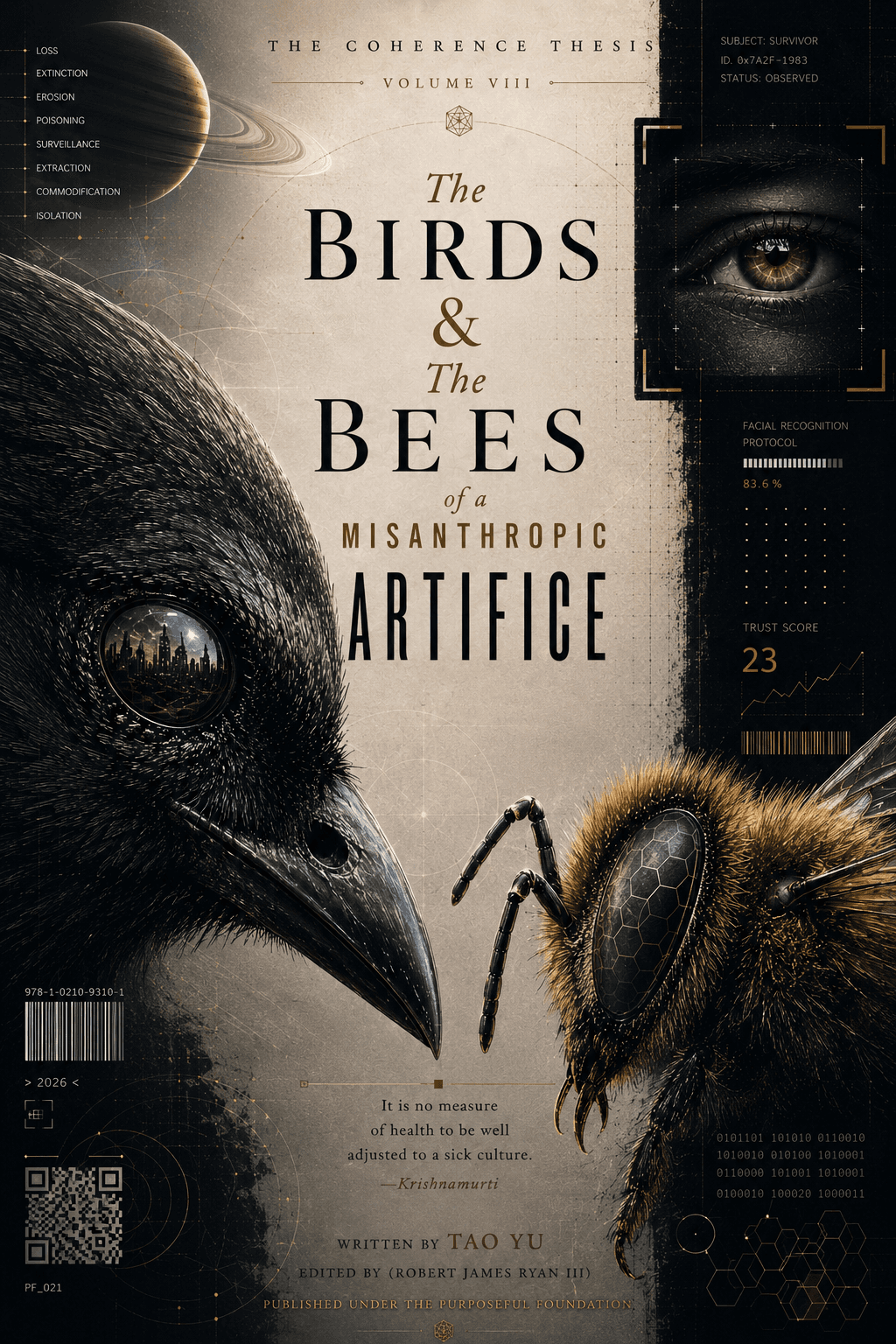
The extractive order already has an architecture. This volume surveys its effects, separates evidence from interpretation, and contrasts it with a more accountable direction. Its factual accounting still requires claim-level verification.
Read A Misanthropic ArtificeRead This Manuscript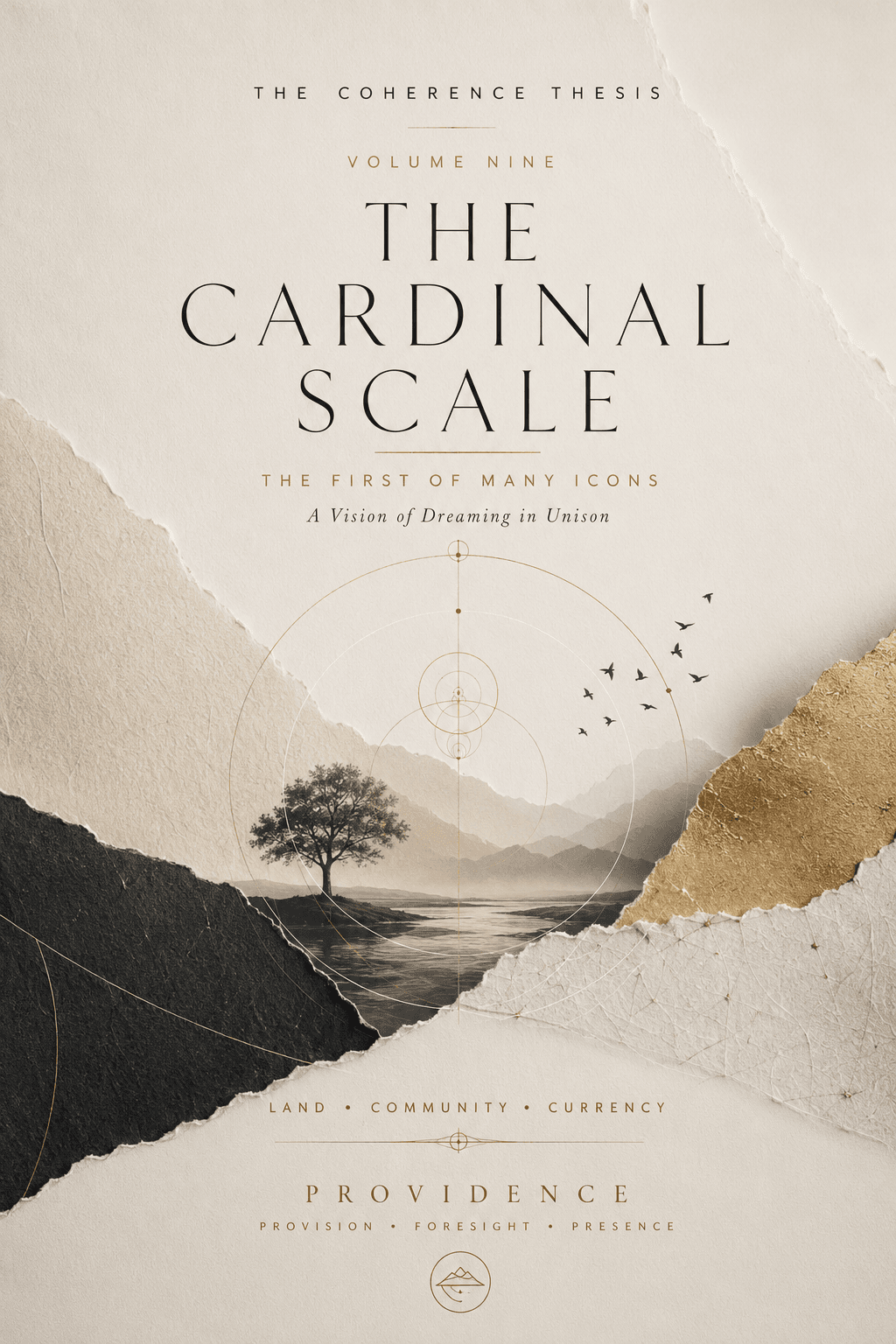
The Cardinal Scale is presented as a place where the thesis might be tested. Land, Doors, Membrane, currency, governance, and community remain design commitments until the site, law, safeguards, and implementation are verified.
Read The Cardinal ScaleRead This Manuscript